We have all experienced that heartbreaking moment. You spend three days writing, filming, and editing what you believe is your absolute best video. You hit publish, refresh the page ten minutes later, and see... crickets. The views are dead.
Immediately, the panic sets in. You start wondering: "Did I post at the wrong time? Is the algorithm punishing me? Am I shadowbanned?"
Here is a hard pill to swallow: The algorithm does not hate you. It just doesn't care about you. But you know who does care? Humans. Real people sitting behind their screens.
If you want to survive as a content creator without burning out, you need to stop playing a guessing game with a machine and start focusing on the people watching. Here is how to shift your mindset from chasing the algorithm to building a cult-like community.
The Algorithm is a Mirror, Not a Monster
Creators often talk about "The Algorithm" like it is an evil boss sitting in a dark room deciding who gets to be famous today. That is completely false.
The algorithm is simply a reflection of human behavior. Social media platforms (whether it is YouTube, TikTok, or Instagram) have only one goal: Keep people on the app as long as possible so they can show them more ads. That is it.
If your video is boring in the first three seconds, people swipe away. The algorithm sees people swiping away, so it stops showing the video. It is not punishing you; it is just reacting to the audience. When you focus on making content that actually helps or entertains a specific group of people, the algorithm will naturally do the work for you.
3 Toxic Habits You Need to Drop Today
1. Mindless Trend Hopping
Yes, jumping on a trending TikTok sound might get you a quick 10,000 views. But ask yourself: Did any of those viewers subscribe? Did they care about who you are? Usually, the answer is no. They cared about the trend, not you.
Instead of doing every dance or challenge, find a way to adapt trends to your specific niche. If you are a graphic designer, use a trending audio but show a cool design trick in the background. Give them a reason to stay after the trend dies.
2. Talking AT Your Audience, Not WITH Them
If your comment section is a ghost town, it is usually because you didn't invite anyone to speak. Stop ending your videos with a generic "Like and subscribe."
Ask a highly specific question. "I spent $100 on this microphone, but I still think the cheaper one sounds better. Which one do you guys actually prefer?" Give them a reason to type. When you reply to their comments, you turn a casual viewer into a loyal fan.
3. Obsessing Over Analytics Every Hour
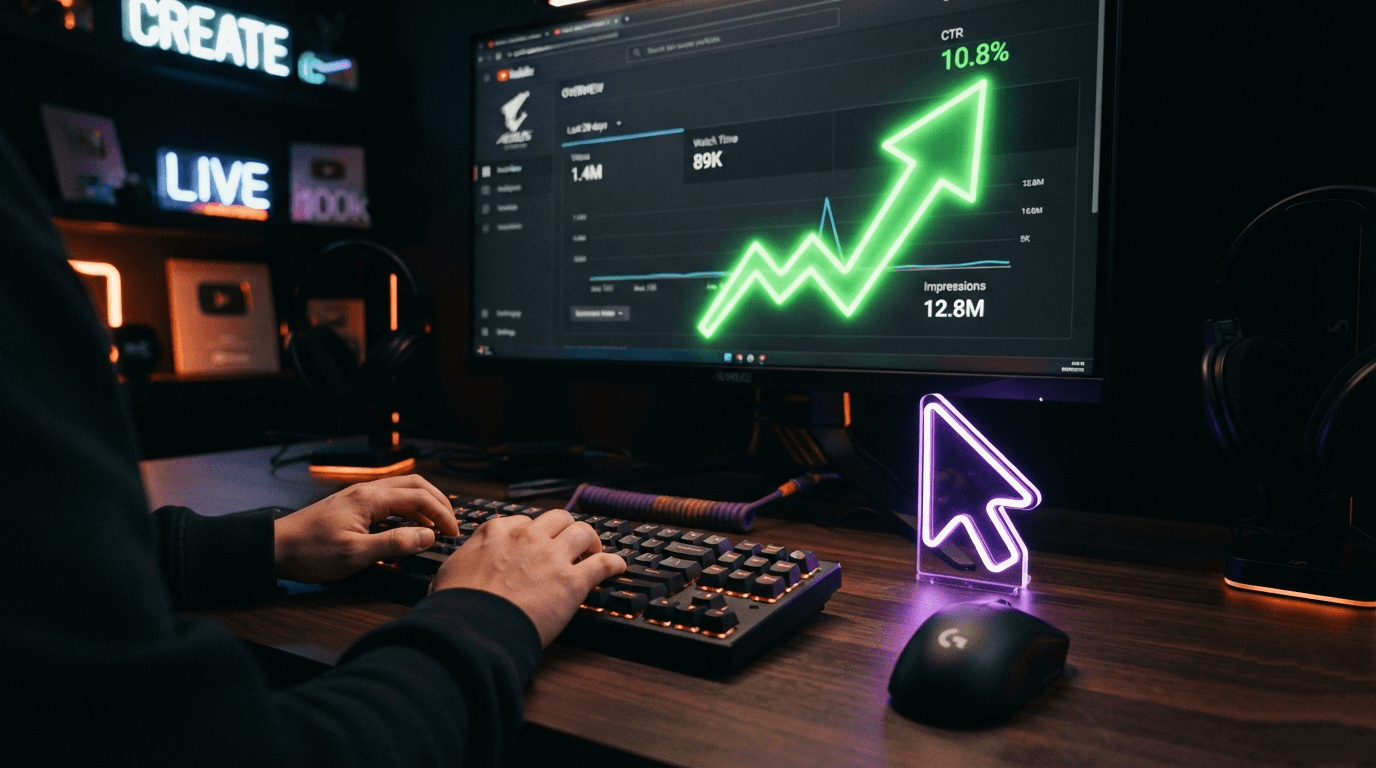
Checking your YouTube Studio or Instagram Insights every 30 minutes is the fastest way to destroy your mental health. Numbers will fluctuate. Some days are good, some days are bad.
Set a rule for yourself: Only check your analytics once a week. Use that data to figure out what worked and what didn't, and then move on. Focus on the creative process, not the scoreboard.
The "1,000 True Fans" Theory
Way back in 2008, Kevin Kelly wrote an essay that is still the bible for creators today. He explained that you do not need millions of followers to make a great living. You only need 1,000 "True Fans."
A true fan is someone who will buy anything you produce. If you write a book, they buy it. If you launch a course, they sign up. If you recommend a product, they trust you enough to click your link.
If you have 1,000 true fans paying you $100 a year (through merch, courses, or Patreon), you are making $100,000 a year. You don't need to be viral. You just need to be valuable to a specific group of people.
Final Thoughts
Algorithms change every few months. TikTok might get banned. Instagram might change its layout again. If your entire strategy relies on a machine, your career is always in danger.
But a strong community? A community follows you everywhere. They will join your email list, they will subscribe to your new channels, and they will support you when the views are down.
Take a deep breath. Stop trying to hack the system. Go reply to some comments, ask your audience what they are struggling with, and make a video just for them. Humans over algorithms. Always.